Palm: 10 Years Of a Poorly Run Public Company

We were having some discussions yesterday about how Palm, in its ten year history as a public company, was a complete and utter failure. One really stupid move after another doomed Palm. A history:

  • Before going public, Eric Benhamou, then CEO of 3COM who owned Palm Computing, proclaimed that Palm would never be spun out as a public entity. Donna Dubinsky and Jeff Hawkins, the creators of the company, said screw you and left.
  • 10 months later, Palm was a publicly traded company.

And thus the stupidity begins.

  • Palm decides that the only way to survive is to license the Palm operating system against Microsoft’s onslaught.
  • Palm, under a series of inept CEO’s, loses focus on what got them there to begin with: being the greatest personal organizer in the history of computing. Instead, Palm decided they could be all things to all people, trying to compete head-to-head with Microsoft.
  • The last of Jeff Hawkins amazingly designed innovations goes to market: the beautiful, elegant Palm V. To this day I think it is still one of the most beautifully designed portable computers and inspired an entire line of products from the company with color, higher resolution displays.
  • Donna Dubinsky and Jeff Hawkins form Handspring, license the Palm OS, and pick up the innovation mantel with expansion ports and, eventually, the Treo smartphone.
  • Palm ships 3 or 4 new devices each year, making it impossible to buy a device and feel good about owning the latest and greatest for more than a month. Also, the company changes the stupid connector on every freakin’ model, meaning customers have to purchase new accessories with every device and pissing off hardware accessory makers everywhere.
  • Sony, Garmin and others license the Palm OS. Rumors swirl that there is unrest among the licensees that there isn’t enough of a wall between the hardware Palm and software Palm.
  • A series of idiotic marketing decisions are made: naming of the two halves of the company, device decisions, and my all-time favorite: the so-called “Palm Economy”, or in other words the biggest load of b******* ever heaped on a developer community that was getting less and less support from Palm.
  • Handheld sales, meanwhile, are dropping every year since 2001 and Palm is investing heavily in vertical markets such as education, FIRE (finance, real estate, insurance), and medical.
  • The OS is spun out into a separate company, Sony stops making Palm OS handhelds, and Palm hardware buys out a failing Handspring to get the Treo and its executive talent back.
  • Treo becomes the hottest smartphone on the planet, selling a few million units per year.
  • Palm hardware licenses Windows Mobile, completely confusing everyone who wants software to run on a Palm.
  • PalmSource, the old software arm that was spun out, gets bought by Access and put out to pasture.
  • Palm believes there is no future in handhelds and fires or re-assigns everyone specifically focused on selling those, wasting a $1 billion investment in the education and medical fields.
  • The Palm TX ships, the last and greatest of the Palm handhelds. It was, for those that never used one, an iPod touch four years ahead of its time. By the way, for those of you counting, iPod touch has sold 40 million units in four years. Apparently there is no future in handhelds.
  • Microsoft stops innovating with Windows Mobile and Palm OS is stagnant so there is no major changes in Treo devices over the years. Since there is no platform innovation, developers aren’t making any money either.
  • The Palm Foleo is announced. The Palm Foleo is canceled. Jeff Hawkins disappears.
  • Jon Rubenstein is hired as the latest in a long line of CEOs. Ed Colligan, Todd Bradley, Eric Benhamou, and Carl Yankowski are just the CEOs of the publicly traded Palm before Jon. David Nagel was CEO of PalmSource when it was a spun off company. Not bad for 10 years!
  • Palm announced webOS and the Palm Pre. Everyone gets excited but devices don’t ship for months and the development environment isn’t ready yet. webOS is an awesome OS using web standard technologies to develop apps.
  • Palm Pre has nice UI but no one has any clue who it is being marketed to. Palm undergoes some torture by trying to sync music directly from iTunes without Apple’s permission. That stupidity ended with Palm giving up. Palm commercials are weird.
  • Palm ships the Pre; webOS in limited beta. You have to be on the short list to get invited and those invited seem to be old Palm OS developers. It was a nice idea to reach out to the base but Palm needed web developers excited. The old Palm OS developers needed a C kernel. Palm swears they won’t make C code work on the Pre.
  • The Pre launches on… wait for it… Sprint. A lot of Sprint customers buy it. No one else switches carriers. Palm then launches the Pixi, which is the Pre without something.
  • Palm announces that C code can now be used as a kernel for developing on the devices.
  • Palm moves to Verizon and AT&T but is overshadowed by Android and iPhone on the two carriers. Bad timing.
  • HP buys Palm, putting an end to a torturous 10 year existence as an independent company.

Writing this was a little cathartic, I have to admit. Hope you’ll add to my recollections in the history. If you are curious about the history before going public, check out Piloting Palm. Very interesting read.
Stealing Is Wrong, No Matter What The Gain

I, for one, am disappointed in Gizmodo. Not only do I think they did the wrong thing in not returning the iPhone 4G to Apple before reporting on it, but they also ruined Christmas morning for me.

First things first. I work hard to teach my kids that stealing is wrong. I hope they have learned that if you do it, you are wrong. And if you stand by while someone else does it, that is wrong too. It is not yours and does not belong to you.

The same thing is true for objects that are found. Before they keep it, it is my children’s responsibility to try and return it to their rightful owner. Sure, you may get nothing in return for it, but I believe in good mojo, karma, what-goes-around-comes-around, etc.

Gizmodo failed on both accounts. They enabled the theft of something that belongs to someone else and didn’t even think to return it until after they published their story on the 4G. Anything for a story, huh, including integrity.

Given that, it is their integrity. I might be more disappointed in what Gizmodo ruined for me. I find that Apple’s product launches are one of the most exciting on the planet. All the weeks of speculation followed by the big reveal. It is true show business and makes me feel like it is Christmas morning. What’s Apple going to pull out of their hat this time? Will all the speculation be right? What did the press miss from their sources and parts suppliers? Gizmodo ruined that for me. All in the name of scooping a story that no one will remember in a few months.

Given these events, I decided that I will no longer go to Gizmodo’s website, link to their stories, or follow their RSS feeds. I can’t, in good conscience, support an organization with such a low-integrity threshold. Not if I want to look my daughters in the face, anyway.

A Modicum of Success!

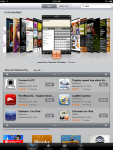
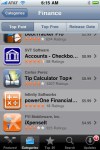
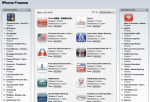
The good times continue here. Now we aren’t talking dollars to retire on, but it is nice to actually be able to pay the bills. I will be the first to tell you that making things happen in Apple’s App Store is hard to do, but for once we were out in front. Being on the iPad on day one with powerOne calculator was the best decision we have made in the last couple of years. A few more screen shots to commemorate the first two weeks of iPad App Store success:

We are #1 in the Finance category for both Top Paid and Top Grossing, we cracked the Top 100 for iPad Top Paid and Top Grossing overall, and because it is a universal app, it has also had a profound effect on our iPhone sales, pushing us as high as #12 in the Finance category for iPhone rankings.

On top of these nice sales, we were also — to our surprise — featured in a keynote slide by Larry Tesler this weekend at iPad Dev Camp in San Jose!

The best of all, though, is this picture. Me with my daughters, Laura (age 4) and Jenna (age 2), running powerOne on the iPad for the first time!

The 5.94 Billion Person Market Opportunity

A local group of mobile technologists got in a lengthy, interesting and occasionally heated conversation spun off from Apple’s license agreement changes. I think most conversations about smartphone and tablet, open v. closed, Apple v. Google, misses the point. Some of you can be upset by the changes and talk about Apple stifling innovation (with or without proof). But these are all tactical details. I’m far more interested in the big picture. What I wrote:

———————————

I think history is actually on Apple’s side. (And Microsoft’s apparently as they are planning on the same closed store infrastructure for Win Phone 7.)

At the turn of the 20th century you had to be very wealthy and a tinkerer to own an automobile. Most layman owned horses and they were relatively low maintenance (feed a horse and it could pull your family around for a decade or more) in comparison, and I would bet most layman said what do I need an automobile for? Starting a car was silly, right? Get out of the car, go to the front, and crank this metal poll around. There were no mechanics so you had to fix it yourself. The first autos catered to the 1% of the world’s population that liked this kind of thing.

Then along came Ford and brought the prices down. More people bought them, they became easier to use and with more people using them, mechanics and others who specialized in understanding the internal workings of an auto came about. While there were some changes for the next 60 years, none effected the auto like the computer, which basically made the home mechanic obsolete. It is unusual to see someone even change their own oil now, let alone fix more complicated things. But almost everyone drives a car today, or knows how.

As the system became more complicated and the tinkerer was boxed out, ironically, more people became users because the entire system became more accessible.

I think the same is happening in computing. Apple isn’t making a smartphone/tablet/entertainment device for you and me, the 1% of the world that are technologists. They are making a smartphone and tablet and entertainment device for the 99% of people worldwide who don’t know an Ethernet cable from a power cord.

We’ve gone from the days of opening up your computer and installing your own hard drives to having to take your laptop to a specialist to get this done. Apple (and Microsoft and others) are just taking the next step, simplifying the design, ability to add content, and make a system attractive to the rest. Whether we like it or not, this evolution is happening.

Look at the top two smartphone/handheld platforms in the US: BlackBerry and Apple. Both extremely simple at doing what they do best (RIM: emailing, texting and Apple: content, entertainment). Since the iPhone and iPod touch introductions in 2007 the two have combined to sell more than 150 million devices. That’s more devices than were shipped in the 20 years of handhelds and smartphone computing before it. Also compare that to laptops, the tool de jeur of technologists everwhere. Nokia, Apple and RIM combined to sell more smartphones than all laptops sold last year, and smartphones are a tiny percentage of the world’s cell phone usage.

I would argue that their appeal to the rest of world is part of what has made them strong players. Of the 6 billion people on this planet, we — those of us who are technically adept — make up less than 1%. They need us to some extent, sure, but catering to the 60 million of us technologists isn’t carrying them forward any more.

Apple, RIM, Nokia, Google and Microsoft, I’m certain, see that the future is selling to the other 5.94 billion people on the planet.

Twitter, Apple and the Paradox of Partnering

The last two weeks have been mind-blowing. In succession Apple launched the iPad, announced iPhone OS 4 (used in iPhone, iPad and iPod touch devices), changes in Apple’s license agreement sent the developer world (particularly Adobe) into a tizzy, and then, as a topper, Twitter bought the maker of Tweetie, a Twitter client.

There is amazing power and tremendous risk in partnering and these four events clearly show the risks and rewards.

Let me be clear that this is no manifesto for going alone. The reality is, as a start-up, we are really made or broken by our initial luck in partnering, whether that’s using someone else’s hardware and operating system, an initial customer, or a strategic relationship with a big partner.

On the positive side, Apple’s iPhone OS and devices running it have brought smartphones to millions of people who never used one before, opening up purchases of third-party apps in a way that has never been done before, and that has created a number of newly wealthy developers (not me). On the other hand a change in two paragraphs in Apple’s license agreement has potentially wiped out a handful of other companies’ businesses.

Twitter has also brought something new to millions of customers, namely a new communication platform. And in one move it might have wiped out thousands of other companies’ businesses by making a choice and buying one of them.

Infinity Softworks has benefited in some ways, too. Almost unrecognized in the iPhone world, being there at launch coupled with Apple’s decision to ship no calculator with the iPad has raised powerOne revenues to breath-slightly-easier levels.

I have learned to ask clear questions about these relationships: Is the partnership short-term or long-term? Is the partner committed to the relationship? Is it likely that we will get in the way of their bigger strategic goals?

Sometimes I guess right. We had a lengthy and fruitful bundling relationship with Palm and other Palm OS licensees, but we were dumped when Palm used an alternative product instead. We were also making tremendous headway in education when Palm decided there was no future in handhelds (ha, ha), shifted focus to smartphones, and fired their education team.

Even when we fit perfectly, it’s not always easy to see how the relationship will work out. (It’s also not every day a company makes a billion dollar investment in a market and then backs out on a dime but that is just the epitome of how poorly Palm’s been run.)

If I’m on the web I’ve got to ask myself these questions about Google, Twitter and Facebook. If I’m reliant on Apple, I’ve got to ask these same questions of it.

And then I have to hope I’m right.