powerOne Honored As Staff Pick

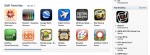
How exciting to wake up in the morning and see that the sales have doubled. I never expect it but it has happened a couple of times. After a moment of shock, I now know to go check out the App Store and see what honor we received. For the first time, starting last night, powerOne was a staff pick!

A few images to commemorate the occasion. Thank you, Apple!

Free Doesn’t Mean Cheap: powerOne Lite Introduced

When I started in this business (1997), advanced calculators — scientific or financial — were expensive. The cheapest full-featured scientific calculators were $20-30 and easily ranged up into the hundreds of dollars. Real financial calculators were $40-120. So we wrote financial and scientific calculators and charged money for them. Our first financial calculator was $39.99, written for PalmPilot, and our first scientific calculators were $29.99 and $49.99 for basic and advanced models.

Fast-forward a decade and our latest calculator for iPhone, iPad and iPod touch is currently $5.99. The product is far more powerful than anything we wrote in the late 1990s and early 2000s but the market has changed. Calculators, especially scientific ones, have become a commodity in the software world. There are hundreds of them, most of them cheap-looking, poor-quality products.

Instead of fighting this trend we have embraced it by releasing powerOne Calculator Lite Edition. It is Lite as it has only a couple of templates and restricts how many you can create (1) rather than the 60 we include plus endless number you can create with the full version.

The calculator included with powerOne Lite functions in standard and RPN input mode, performs real, fraction and feet-inch math, and includes power, logarithm, and trigonometric functions. It includes a history of computations plus ten memory locations for storage. The same application runs on iPhone, iPad and iPod touch.

In addition, powerOne Lite Calculator includes templates — think mini-spreadsheets — for calculating percent change, tips, date conversions, exchange rates (with auto updated data), and summary calculations like average, max and min. In addition, you can create one for yourself, taking advantage of powerOne calculator’s simple formula-based language.

The full version includes all this plus 55 additional templates for conversions, finance, investing and real estate. You can also create an endless number of templates. [link to App Store]

The trend toward less expensive calculators is pervasive now. Everyone deserves a high-quality, beautiful calculator to call their own. And we will move where others won’t follow: ability to create your own templates, add-on templates and choose from those calculations that meet your specific needs for business and school.

WWDC Aftermath

Various observations from my week at Apple’s developer conference (WWDC):

  • There were a few smokers at the conference and they would all go out on the patio on the third floor to smoke. None of them seemed to speak native English.
  • Amazing how many people came in from outside the US for this. I met people from Canada, Columbia, Brazil, England, Germany, France, Spain and Australia, just to name a few off the top of my head.
  • I always find it funny going to these conferences and seeing people I already know from Portland. In fact, I mostly see these folks, people who live minutes from my home and office, 1000 miles away rather than here in Portland.
  • I also find it funny that I seemed to run into the same people all the time. For instance, I had breakfast with the same person every day. It wasn’t coordinated. It just happened that way.
  • San Francisco is a lot dirtier than I remember it from six or seven years ago, the last time I spent any time in the city.
  • I arrived on Sunday last week and left on Friday afternoon. Five days is exhausting. My brain didn’t slow down from the time I got off the airplane. It just kept running all week, day and night. On top of that, five hours of sleep a night — even without a running brain — isn’t enough sleep for me. I slept like crazy this past weekend.
  • In one session the presenter asked how many had not shipped an app.  About 2/3 of the room raised their hands. That surprised me especially since the sessions were fairly advanced. It was in a session, however, for beginners, so the ratio might have been skewed. (I went to a few beginner sessions just to make sure I didn’t miss anything in my learning process. Every session gave me at least a nugget or two.)
  • 5000+ people at Moscone was more people than at my high school, undergrad and grad universities combined.
  • I have never stood on so many lines in my life. There were lines into the building in the morning, lines into the breakfast/lunch room, lines into every session, lines to sign up for labs, lines into the men’s room. (One of the few times the lines were shorter into the women’s room than the men’s, which is a sad statement about the number of female developers, I am afraid.)
  • I went to an event here in Portland yesterday sponsored by Edward Tufte. Very interesting discussion of infographics, or the use of visuals to represent large chunks of data. There were about 500 people there. Even though the Tufte crowd was 1/10 the size of WWDC, there were way more women in the crowd.
  • It was a good week. I learned a lot, met some interesting people. But I sure am happy to be home.

WWDC 2010/Predicting Apple’s Future

I am at Apple’s Worldwide Developer Conference (WWDC) this week. On Monday, Steve Jobs gave his keynote where he focused exclusively on iPhone 4 and iOS 4. (Apple changed the OS name from iPhone OS to iOS.) The new device looks nice: camera, video in HD, new OS features, beautiful and innovative device design and the new open sourced FaceTime for video chat.

But what was more interesting was what wasn’t mentioned. No discussion of Mac computers at all. Most of the rumors turned out to be false: no Apple TV, no MacBook refresh, no fancy mice. (Really? Mice? Since when does that merit keynote mention?)

But my question to all those lementing is, why would Apple announce all these now? Apple never makes announcements until the products are ready to go. The company does not believe in vaporware at all. And if anything, Apple knows how to keep the focus on it. As far as I can tell, I am expecting a major new Apple announcement every couple of months for the next year. Let me outline them for you:

July: Mac event
This is where we hear about the MacBook and MacMini refreshes, potentially new monitors and the new mouse, if it exists. Perfect for those back to school shoppers, especially those who are sending their kids off to college.

October: “Music”event
Every year Apple does a music event with iPod refreshes for the holiday season. I think this will be a very special announcement that advances Apple’s strategic goals. The center piece of this event will be the new iPod touch with optional 3G. The reason this will be special is because optional 3G+wifi devices coupled with multitasking in iOS4 will make it possible to use Skype or another VoIP service for all your phone calls, bi-passing the carriers all together (except to act as a pipe). Both Google and Apple have this important goal in common.

February: Connected Life event
Apple has made a number of acquisitions and is doing a number of things behind the scenes that will set up this event. What am I talking about? How about a massive, $1 billion data center in North Carolina, purchases of Siri and LaLa, and very old Apple TV. This will be Apple’s web strategy coming out party, where all of your devices – iPad, iPhone, laptops and desktops, Apple TV (which must be re-branded iTV and will now be powered by iOS)– and all of your files are connected via one cloud-based account that is tied into iTunes and based on MobileMe.

March: iPad 2
The iPad is updated to take advantage of iPhone 4 innovations: forward and backward facing cameras, video recording, and higher resolution “retina” displays. It will be magical… all over again!

April: iOS5
The next rev of the operating system that powers iPhone, iPod touch, iPad and iTV will be introduced with betas ready for us developers right after Steve Jobs’ keynote.

June: iPhone 4G
Apple’s next generation phone will be LTE compatible, which means you can use it with any carrier, and will be 4G compatible. Good-bye AT&T hell. Hello Verizon hell.

A few thoughts on WWDC, Google I/O and the iPad

I love my iPad but there are too many videos I can’t watch thanks to this Flash problem. As a developer and thinker, I completely understand where Apple is coming from and agree with everything Steve Jobs said in his open letter. As a user, though, it is just a pain in the neck. I wish the two could get together and figure out some way to make this work. Something like a separate app that could only run videos. I know it is not going to happen, but I sure wish it would. (Or I wish the world’s video hosts would transition their sites to run on the iPad faster.)

One of the things I hope we see from WWDC is a new Apple TV. Now that I have the iPad I am finding myself watching a lot more video. And not just movies and TV shows and Netflix streaming and baseball games, by the way. A lot more video on the web. I would love to have all these things in one place and available on the big screen in the house when I want it. The problem, of course, is that it will likely run iPhone OS, which still means no Flash, which means many of the videos I want to watch still won’t work.

I also hope Apple is more grown up than Google. I use a lot of Google products and use them every day, but their Google I/O spit balls  aimed at Apple were sophomoric at best. I didn’t like that stuff when I was in middle school. I sure don’t like it now. Let’s face it, the smartphone market is not one of those markets where we are going to have a 90-10 split between two competitors. It is likely that we will see a couple of companies in the 30-40% market share range and a couple of others in the 5-10% range. We are talking about 3.6 billion potential customers here! Let’s also realize that Apple and Google are both better off for having each other. Apple will push Google to make better UI and streamlined devices. Google will push Apple to create better and better products and (hopefully) curb their worst tendencies.