Hayao Miyazaki Retires

20130915-161043.jpg

Hayao Miyazaki, the famed Japanese animator, announced that he is retiring a few weeks ago. Miyazaki animated and directed one of my all-time favorite movies, one called My Neighbor Totoro.

It is the story of two young girls who live with their father in 1958 Japan. Their mother is sick in the hospital so the family moves into a new home to be closer. As the family gets used to their surroundings, the two girls discover they have a very special neighbor.

It is such an amazingly gentle movie, one very much at odds with the typical hero-worship faire of Western culture. I’ve found with my own daughters, about the same age as Sasuki and Mei, that they have this amazing ability to seamlessly intermix the “real” world with their “pretend” world. Few movies I’ve ever seen embody this ability like My Neighbor Totoro.

The version I’ve seen is the English version released by Disney and voiced by Tim Daly and two of the Dakota sisters. It is definitely available through Netflix or to purchase from Amazon.

The Best Platform For Incubation Is The Web

John Battelle on the open web, incubators and starting businesses (emphasis mine):

In the past few years, entrepreneurship seems to have become a profession, like acting or sales or architecture. On the one hand, that’s a good thing, it means more companies, more jobs, and more great ideas. On the other, something about it strikes me as a bit …forced. I can’t put my finger on it, quite yet, but it centers around the idea that we’re credentializing innovation. … I never saw starting companies as a career path.

I, too, have noticed a significant increase in people who are doing start-ups because they want to do a start-up, not because they have some burning desire to solve some problem that they won’t be able to solve working for someone else. Maybe that’s a good thing, maybe it isn’t. Maybe we have reached the tipping point of technology start-ups where people like me, us early doing-a-start-up adopters, are on the outside looking at an idea that has reached the mainstream. We are just curmudgeons who sit around saying, “Back when I did my start-up… .”

Then again, I can’t help but wonder how long these people will last. Doing a start-up sounds fun until the sine curve takes effect, until the money gets tight and the times get hard. Is “doing a start-up” a fad, or a long-term, populist movement? I have a hard time seeing these people who are doing this for the start-up lifestyle surviving for long.

(via Michael Mace)

The Top Challenges Of 2,000 Designers, Entrepreneurs And Product Managers

Fascinating infographic from Keynotopia on the challenges impacting designers, entrepreneurs and product managers [1]. One that jumped out at me regarding Bootstrapping:

Most entrepreneurs we surveyed said they prefer to take the time to bootstrap their business slowly and steadily, rather than raising money from investors and growing too fast too quickly. The biggest challenge is to generate revenue while bootstrapping: to acquire enough customers and have them pay for the product.

Huge challenge. There is a time and place for funding. The right investors can help accelerate a business in amazing ways. The wrong investors will sink the business before it starts. Investors have their own agendas and time frames. Some businesses, especially in the early days, don’t fit those kinds of timelines. Thus we get acquihires for businesses that, if they had grown more organically, could have been amazing businesses.


I have to admit that funding is inviting. The idea of working with really smart people, surrounding myself with a team of dedicated people trying to do amazing things, is really exciting. And sometimes it seems like every company is funded. But that’s not true. In fact the majority of business, technology or otherwise, are not funded by anyone but the founders and maybe a loan.

Those with funding dismiss those without by calling them “lifestyle” businesses, a derogatory term that implies we just aren’t serious. But that’s not true either. I work as hard as any funded company does.

I’m just not ready to take other people’s money.

[1] I’m a customer.

[2] Buy the company to get the employees.

The Start-Up Sine Curve

It is nearly impossible to describe to someone else the emotional extremes that encompass the planning, building and releasing of something new. Most describe it as a roller coaster but a roller coaster does not give justice to the extremes, to the sudden ups and downs and the fact that the process smooths over time. I think starting a new product or new company looks more like this:
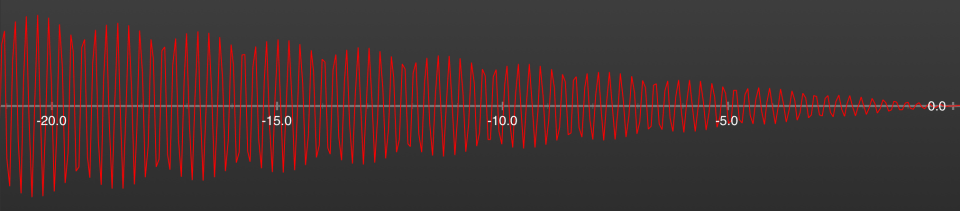
image-1

Time starts to the left and works its way to the right. On the positive side, all the stuff above the line, are all the good things. This includes the accolades, the re-tweets, the positive customers conversations, seeing code turn into a usable product and the plans turning into reality. On the negative side, though, all the stuff below the x-axis, is the negative feedback, the “why in the world would I use this” comments, the ignored emails and delays, server crashes and general human fears and frustrations.

It starts way on the left and juts up and down quickly and rapidly. Sometimes it feels like I go through 10 of these positive/negative swings in the same day and sometimes it feels like I’m wallowing in negativism or sailing on a sea of positive thoughts for weeks at a time.
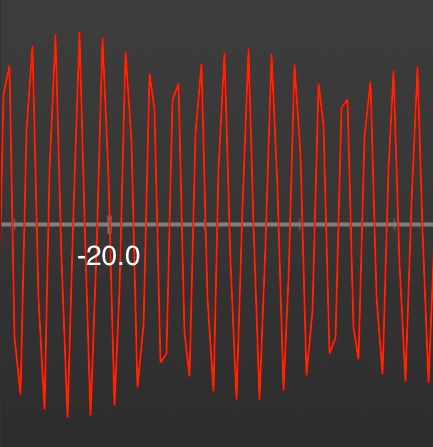
image-2

I turned 40 a few weeks ago and now have almost 20 years of entrepreneurship behind me. One thing that gives me a sense of ease with this process is that I always know what goes down comes back up. (Of course the opposite is true, too, but I prefer not to focus on that.)

The second thing I know is that, over time, the ups and downs even out, the turbulence isn’t so turbulent. As we approach 0, I think that’s the point where we attain product/market fit, the point at which we start seeing a repeatable sales process and positioning that works with prospective clients. This also happens to be the inflection point where companies grow, the point where we share the ups and downs with others.
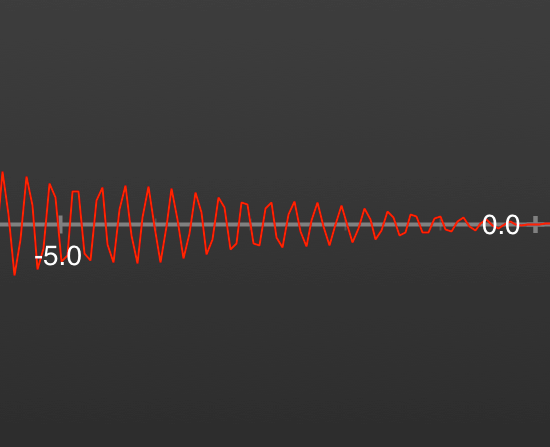
image-3

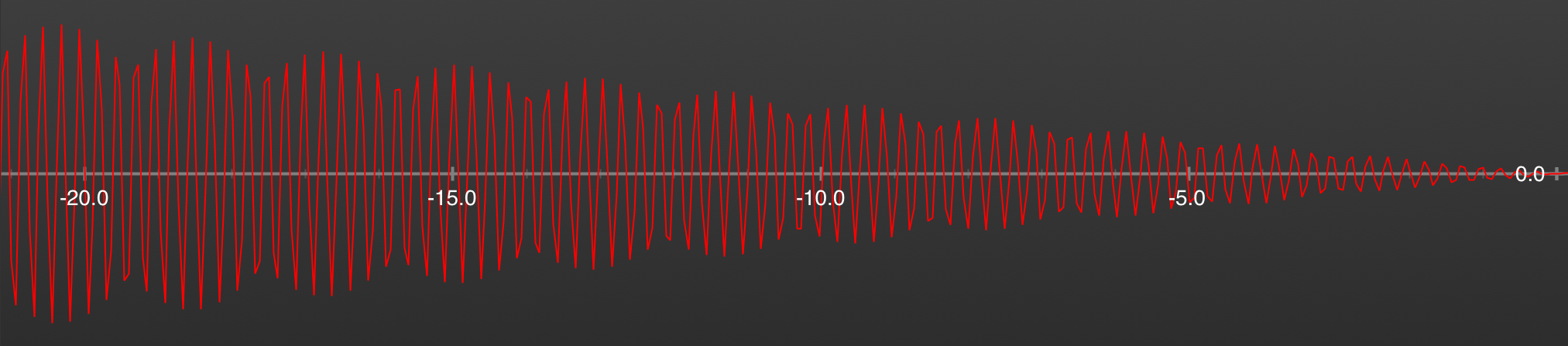
I’m going through this now. I’m somewhere around the mid-point in the chart, somewhere around -10, on the x-axis approaching a private launch in the next week. Two weeks ago I was mired in code that would break every time I made a change. Then I had some amazing customer conversations followed by some very negative ones. I was bogged down in that for a few days before a few phone conversations with “true believers” helped lift me up. My fears are numerous: where is the money to keep going, the energy to see this through, whether anyone will care and be interested. Can we keep servers up? Can we build something that people are really willing to pay for?

When people say building a start-up is hard, they don’t specify that building the product is only a small portion of the battle. Fighting off the negative demons that affect our dreams is the true center of the fight. What keeps me going, though, is that I know it will get easier in time.

Good Reads IV

It’s been a long few weeks of programming here, completely bogged down in trying to make HTML behave the way I need to behave. I’ve read tons of amazingly good articles with little time to link to them or write about them, so instead I will dump an entire batch on you at once.

  • The Perils of Shiny New Objects by Mark Suster. Oh, man, is this killing me right now. We are so close to shipping Equals. After months and months of working hard it is so easy to feel like all of this will be for naught. So my mind wanders to shiny new things. The “grass is greener over there” syndrome.
  • The Innovator’s Curse by Horace Dediu. Horace argues that innovators are cursed with the need to always innovate, to always use previous innovation revenues to funnel future innovation revenues. But markets rarely believe in the next thing until it has already come to pass, at which point the innovative company is already using those proceeds to funnel the next innovation. Fascinating argument on why innovative companies are undervalued and why markets reward companies who stop innovating, eventually killing those companies. Oh, what a tangled web we weave.
  • Sometimes The Best That A Company Can Hope For Is Death by John Kaye. Following The Innovator’s Curse post, here is an incredible article on corporate death. John argues that death is as natural apart of corporate life as it is human life. At some point all companies come to their conclusion, and that’s okay. (via Ben Thompson)
  • Giving Up the PED Guessing Game by Gabe Kapler. Interesting look from the inside on what drives athletes to use performance enhancing drugs. Gabe played major league baseball during the steroid era, was a solid to good ballplayer, and says he was tempted but never used PEDs.
  • Anatomy Of A Hack: Even Your ‘Complicated’ Password Is Easy To Crack by Dan Goodin. Oy! Maybe the best we can do is make it harder. After all, if a thief has one house with an alarm and one with an open window and no alarm, he will likely pick the one with the open window and no alarm.
  • Balky Carriers And Slow OEMs Step Aside: Google Is Defragging Android by Ron Amadeo. In short, Google has figured out how to protect itself by embedding an updatable runtime within Android that only it can update and is only available to Google apps. Oh, Google, have you ever heard the phrase, “eat your own dog food?” You created this mess. You should have to live with it, too.