Beware The Feature

There’s a story that’s been around for a couple of years now about how Drew Houston of Dropbox met with Steve Jobs. This from the Forbes article:

In December 2009 Jobs beckoned Houston (pronounced like the New York City street, not the Texas city) and his partner, Arash Ferdowsi, for a meeting at his Cupertino office. “I mean, Steve friggin’ Jobs,” remembers Houston, now 28. “How do you even prepare for that?” When Houston whipped out his laptop for a demo, Jobs, in his signature jeans and black turtleneck, coolly waved him away: “I know what you do.”

What Houston does is Dropbox, the digital storage service that has surged to 50 million users, with another joining every second. Jobs presciently saw this sapling as a strategic asset for Apple. Houston cut Jobs’ pitch short: He was determined to build a big company, he said, and wasn’t selling, no matter the status of the bidder (Houston considered Jobs his hero) or the prospects of a nine-digit price (he and Ferdowsi drove to the meeting in a Zipcar Prius).

Jobs smiled warmly as he told them he was going after their market. “He said we were a feature, not a product,” says Houston.

Houston is doing some amazing things with Dropbox, none of which I’d consider a feature. I’m certain Jobs was negotiating. But all the same, being a feature to a larger product is a recipe for being run over.

Microsoft was a company incredibly good at taking other people’s products and turning them into features. Palm, on the other hand, was horrible at it. For a company known for making personal productivity tools their apps were anything but productive. Year after year I expected Palm to add features and they never did. Many people lauded the company for not wiping out their developer community. I always thought it was just stupid.

Building a company is hard and takes a lot of luck. Some of that luck revolves around timing and partnerships and the right people picking up the product and evangelizing it. But some of that luck is that a bigger company doesn’t just run you over on their way to their next billion.

To College or To Start Up, That Will Be The Question

Paul Graham writing on investment trends:

When I graduated from college in 1986, there were essentially two options: get a job or go to grad school. Now there’s a third: start your own company. That’s a big change. In principle it was possible to start your own company in 1986 too, but it didn’t seem like a real possibility. It seemed possible to start a consulting company, or a niche product company, but it didn’t seem possible to start a company that would become big.

What do you mean by “graduate from college?” With the price of college education skyrocketing and the costs to start a company shrinking, which will potential students opt for? I sure wouldn’t bet on college.

I started Infinity Softworks while I was a senior in college. When I graduated in 1997 what I did — starting a company right out of school — was very unusual. I was weird. Now people don’t even blink, at least not among the under 50 crowd. Now it strikes me as odd when a smart kid graduating from college opts for a big, established, brand-name company. What? Couldn’t start your own company?

The Sacrificial Lamb

In 1997 when I started Infinity Softworks, I actually intended to write a personal money tracking application, the first of a suite of finance applications that would include investment tracking, expense tracking and more. Palm OS in those days, though, was hard to work with and I was very inexperienced in the ways of event-based software and record storage. I became very frustrated very quickly and started looking for another project to work on that would be easier to implement and decided to write a financial calculator. I could use the simple storage mechanism (preferences) instead of a database and could focus on understanding event-based programming specifically and Palm OS in general.

It took a while and a number of things happened to slow me down, but eventually I completed the app and started thinking about selling it. To you youngsters you may not realize this but once upon a time how we sold apps was less clear cut. There wasn’t just an app store to upload it to and be done. We could package our own apps on floppy disc or CD selling them directly, we could build and sell off our own websites, we could find a partner to take us into retail, we could sell through a few online locations. We did the obvious stuff, creating a site, uploading to various online resellers, and setting up an 800 number to take orders and mail those out [1].

Retail, though, had the most potential in those days. There were two retail channels we considered: physical stores (like CompUSA and Office Depot) and catalog stores (like MacMall) [2]. There were huge risks and huge rewards but just like the app stores now, every retail outlet was clamoring for things to sell next to those hot selling PalmPilots. We had no money to do it, though, and it took a lot of money.

Lucky for me, my business partner at the time grew up in Silicon Valley and his dad sold software for large companies. He agreed to help us with our first deal and found that Macmillan Digital Publishing was doing Palm shareware packs and selling them through retail stores. Instead of us building our own retail presence, he helped us get our first deal — one of seven apps in the PalmPilot Business Pack.SWBUSPALM
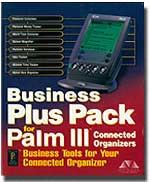
At the time we only had one app, an app that came to be known as FCPlus Professional, a full-featured entry-level financial calculator. I fretted over including the entire application in the Business Plus Pack as it was our only potential source of revenue at the time and, after six months of working on it, I hadn’t made a penny yet.

“You may need a sacrificial lamb,” my partner’s dad told us.

I remember having no clue what he meant so he explained it to us. We may need to consider a version of our app that we could use for promotional purposes. We’d give the app away for free (or make little money off it) with the hope of selling other complementary products. He also thought the potential was there to sell the app to a third-party outright, and then use those proceeds to build other things we wanted to do. So instead of bundling FCPlus Professional, we designed a slightly lesser version called FCPlus and bundled it with Macmillan’s packs. It was a fully working financial calculator, just with less features than the Pro version. We didn’t make that version available for purchase directly from us or anyone else at the time, but we did offer half-price upgrades to those who had it.

Six months after we launched FCPlus with Macmillan, Palm came calling. They were going to put together an add-on pack of software and bundle it with every device. There were two available financial calculators on the market, ours and a competitor. They wanted ours but if we didn’t agree to give it to them (yes, give) they would go to the competitor. We were backed into a corner.
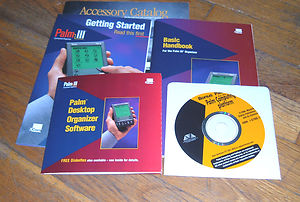
bonus pack

The “sacrificial lamb” comment came right back to me again. We reluctantly agreed to include FCPlus with every Palm sold, feeling like we had no choice. It turned out to be a very smart move on our part and over time we figured out how to make the freemium model work for us. [3]

Fast forward 15 years and Infinity Softworks as a company is in a massive transition. Over the next few months we will release a version of powerOne calculator that looks and feels right on iOS 7, re-designed and developed from the ground up, and a new application that we think is our future, an app that is the culmination of 16 years of learning about how people work with numbers and how we can improve that process.

I can’t help but think about those words once again: “You may need a sacrificial lamb.”

[1] We didn’t sell electronically off our site, though. In the early days we couldn’t get online credit card processing so the website form came to us via email and then we entered the card manually into the machine in a closet. Very secure!

[2] Almost all of those retail stores are gone now, and the ones that remain don’t sell much software anyway.

[3] Although it wasn’t known by that term for almost another decade.
Money and Politics

This might be the most thought-provoking video I’ve ever seen on politics and money. Ugh! Politics, you say? Why are you talking about that here? Well, it is critical. Maybe you don’t like it but it shapes all of our lives and we better start working toward a better model than we have now.

Lawrence Lessig does an incredible job of explaining the current situation and how we can fix it. Take 18 minutes and watch it. You won’t regret it.

Apple and Sustainable Business Models

Ben Thompson wrote a series of great posts on App Store dynamics and, in particular, on sustainability for productivity apps. In the latest post on the topic Ben outlines what he sees succinctly:

Unfortunately, productivity apps are a terrible match for app store economics. The app store favors:

  • Simple, inexpensive apps that are downloaded by a lot of people
  • Free front-ends for for-pay or advertising-based services
  • Games with repetitive mechanics that can monetize existing users through in-app purchases

The solutions for enabling sustainable productivity apps are actually pretty obvious – just look at how productivity apps make money elsewhere:

  • More expensive apps with trials
  • Paid updates
  • Built-in subscription support

And yet, iOS 7 introduces radical change in nearly everything except for app monetization. Why doesn’t Apple do more to enable sustainable businesses on the app store?

He goes on to answer his own question. I think there are a couple of other possibilities:

APPLE IS BLINDED BY THE FOREST

This app market is so crazy and moving so fast that Apple may not even see the problem. To Apple it may look like one giant forest of apps when what is really going on is that a whole series of ecosystems are residing next to each other. The gaming and entertainment ecosystems are doing quite well. They have tools to make them more successful like in app purchases. Apple put special tools in place for news apps, too. But productivity blends in. Apple may not even recognize that there is a problem.

APPLE DOESN’T CARE

Let’s be honest here: my inability to make a living wage is not Apple’s problem. It is possible that Apple just doesn’t care, figuring the market will work itself out. They give us a lot of tools to work with: one-time purchases, free app distribution at no charge, news stand and subscriptions, in app purchases. From here, they may figure, it is our problem. Go figure it out.

APPLE IS WORKING ON SOMETHING

Apple is a very famously a quiet company. We don’t really know what is going on internally. Maybe Apple is and has been working on a major overhaul with all kinds of things developers have been asking for. Maybe Apple has a whole series of things in the works that are being held up by a massive overhaul of iTunes and its ten-year old infrastructure riddled with technical debt and spaghetti code. The massive overhaul that is iOS 7 may be followed by a massive overhaul of iTunes and its infrastructure next year. Since Apple is doubling down on secrecy we may not know until Apple decides it is time for us to know.

PURE SPECULATION

Personally, I think Apple has been very clear. They give us a number of tools and it is our job to figure it out. Apple has a way of indicating what is coming years in advance and I think the fact that Apple doesn’t charge us to host free apps in the App Store is a pretty good indicator. The App Store is an incredible distribution mechanism but, at least for productivity apps, a horrible monetization mechanism.